Questions are based on the following passage.
Fear can be an effective way to change behavior. One study compared the effects of high, fear and low-fear appeals on changes in attitudes and behaviors related to the dental hygiene(卫生).One group of subjects was shown awful pictures of(36)_____teeth and diseased gums;another group was shown less frightening materials such as plastic teeth,charts,and graphs.Subjects who saw the frightening materials reported more anxiety and a greater
(37)_____to change the way they took care of their teeth than the low-fear group did.
But were these reactions actually(38)_____into better dental hygiene practices? To answer this
important question,subjects were called back to the laboratory on two(39)_____(five days and six weeks after the experiment..They chewed disclosing wafers(牙疾诊断片)that give a red stain to any uncleaned areas of the teeth and thus provided a direct(40)_____of how well they were really taking care of their teeth.The result showed that the high.fear appeal did actually result in greater and more(41)_____changes in dental hygiene.That is,the subjects(42)_____to high-fear warnings brushed their teeth more(43)_____than did those who saw low-fear warnings.
However, to be all effective persuasive device it is very important that the message not be too frightening and that people be given(44)_____guidelines to help them to reduce the cause of the fear.If this isn’t done,they may reduce their anxiety by denying the message or the
(45)_____of the communicator.If that happens,it is unlikely that either attitude or behavior change will occur.
注意:此部分试题请在答题卡2上作答。
A.accustomed
B.carefully
C.cautiously
D.concrete
E.credibility
F.decayed
G.desire
H.dimensions
I.eligible
J.exposed
K.indication
L.occasions
M.permanent
N.sensitivity
O.translated
第36题应填______
参考答案
答案解析
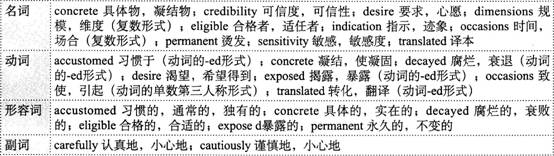
Fear can be an effective way to change behavior. One study compared the effects of high-fear and low-fear appeals on changes in attitudes and behaviors related to the dental hygiene (卫生). One group of subjects was shown awful pictures of (36)decayed teeth and diseased gums; another group was shown less frightening materials such as plastic teeth, charts, and graphs. Subjects who saw the frightening materials reported more anxiety and a greater (37)desire to change the way they took care of their teeth than the low-fear group did.
But were these reactions actually (38)translated into better dental hygiene practices? To answer this important question, subjects were called back to the laboratory on two (39)occasions (five days and six weeks after the experiment). They chewed disclosing wafers (牙疾诊断片) that give a red stain to any uncleaned areas of the teeth and thus provided a direct (40) indication of how well they were really taking care of their teeth. The result showed that the high-fear appeal did actually result in greater and more (41)concrete changes in dental hygiene. That is, the subjects (42)exposed to high-fear warnings brushed their teeth more (43)carefully than did those who saw low-fear warnings.
However, to be an effective persuasive device it is very important that the message not be too frightening and that people be given (44)eligible guidelines to help them to reduce the cause of the fear. If this isn't done, they may reduce their anxiety by denying the message or the (45)credibility of the communicator. If that happens, it is unlikely that either attitude or behavior change will occur.
译文:
恐惧是改变行为的有效方式。一项研究比较了高恐惧和低恐惧感染力对有关口腔卫生的态度和行为变化的影响。研究小组向其中一组受试者展示了有关(36)龋齿和牙龈病的恐怖图片;又给另一组人看了不是那么可怕的材料,例如树脂牙、图表和图形。看到可怕材料的受试者比低恐惧小组显得更加焦虑,也更(37)想要改变护理牙齿的方法。
但是这些反应真的能(38)转变成更好的口腔卫生习惯吗?为了回答这个重要的问题,受试者两 (39)次被召回到实验室(分别在试验的五天后以及六个星期后)。他们都嚼了牙疾诊断片,这种牙疾诊断片会在牙齿上没有清洁的地方留下红色的污渍,因而也就直接(40)说明了他们护理牙齿的程度。结果表明高恐惧感染力确实能引起口腔卫生方面更大且更(41)具体的改变。也就是说, (42)接触高恐惧警告信息的受试者比那些看到低恐惧警示信息的人刷牙更(43)认真。
但是,要想成为一个有效且有说服力的方法,信息就不能太吓人而且也应当为人们提供(44)合适的参考指南帮他们减少引起恐惧的原因。如果做不到这一点,他们就会通过否认接收到的信息或者是信息传播者的(45)可信度以缓解焦虑。如果是这样的话,就不可能会出现任何态度或者行为上的改变。
选项词性归类