简答题
财务成本管理
题号 #5493708
(本小题可以选用中文或英文解答)甲公司是一个材料供应商,拟与乙公司建立长期合作关系,为了确定对乙公司采用何种信用政策,需要分析乙公司的偿债能力和营运能力。为此,甲公司收集了乙公司2018年度的财务报表,相关的财务报表数据以及财务报表附注中披露的信息如下:
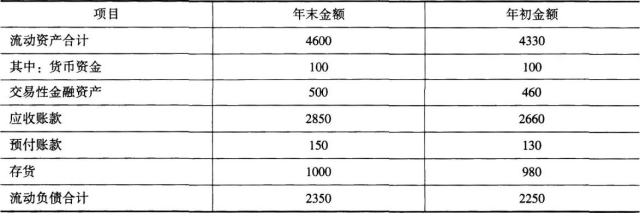
(1)资产负债表项目(单位:万元)
(2)营业收入14500万元,财务费用500万元,所得税费用24.38万元,净利润97.50万元。
(3)乙公司的生产经营存在季节性,每年3月份至10月份是经营旺季,11月份至次年2月份是经营淡季。
(4)乙公司按照应收账款余额的5%计提坏账准备,2018年年初坏账准备余额140万元,2018年年末坏账准备余额150万元。最近几年乙公司的应收账款回收情况不好,截至2018年年末账龄三年以上的应收账款已达到应收账款余额的10%。为了控制应收账款的增长,乙公司在2018年收紧了信用政策,减少了赊销客户的比例。
(5)乙公司2018年资本化利息支出100万元,计人在建工程。
(6)计算财务比率时,涉及的资产负债表数据均使用其年初和年末的平均数。
要求:
(1)计算乙公司2018年的速动比率;评价乙公司的短期偿债能力时,需要考虑哪些因素?具体分析这些因素对乙公司短期偿债能力的影响。
(2)计算乙公司2018年的利息保障倍数;分析并评价乙公司的长期偿债能力。
(3)计算乙公司2018年的应收账款周转次数;评价乙公司的应收账款周转速度时,需要考虑哪些因素?具体分析这些因素对乙公司应收账款周转速度的影响。
参考答案
暂无
答案解析
(1)速动比率=[(100+100+500+460+2850+2660)/2]÷[(2350+2250)/2]=1.45
评价乙公司的短期偿债能力时,需要考虑应收账款的变现能力。乙公司按照应收账款余额的5%计提坏账准备,2018年年末账龄三年以上的应收账款已达到应收账款余额的10%,实际坏账很可能比计提的坏账准备多,从而降低乙公司的短期偿债能力。乙公司的生产经营存在季节性,报表上的应收账款金额不能反映平均水平,即使使用年末和年初的平均数计算,仍然无法消除季节性生产企业年末数据的特殊性。乙公司年末处于经营淡季,应收账款、流动负债均低于平均水平,计算结果可能不能正确反映乙公司的短期偿债能力。
(2)利息保障倍数=(97.50+24.38+500)÷(500+100)=1.04
乙公司的利息保障倍数略大于1,说明自身产生的经营收益可以勉强支持现有的债务规模。由于息税前利润受经营风险的影响,存在不稳定性,而利息支出却是固定的,乙公司的长期偿债能力仍然较弱。
(3)应收账款周转次数=14500+[(2850+150+2660+140)÷2]=5
乙公司的生产经营存在季节性,报表上的应收账款金额不能反映平均水平,即使使用年末和年初的平均数计算,仍然无法消除季节性生产企业年末数据的特殊性。乙公司年末处于经营淡季,应收账款余额低于平均水平,计算结果会高估应收账款周转速度。
计算应收账款周转次数时应使用赊销额,由于无法取得赊销数据而使用营业收入计算时,会高估应收账款周转次数。乙公司2018年减少了赊销客户比例,现销比例增大,会进一步高估应收账款周转速度。
【英文答案】
( 1 ) Quick ratio= ( 100+ 100+500+460+2850+2660) +(2350+2250) = 1.45
In assessing the short-term solvency of Company Yi, it is necessary to consider the liquidity of accounts re-ceivable. Company Yi calculates its balance in allowance account at 5 percent of year-end account receiva-ble. Accounts receivables aged over three years at the year end of 2018 have reached 10% of the total bal-ance of accounts receivable. The actual bad debt expense is likely to be more than the allowance for uncol-lectible accounts, so Company Yi's short-term solvency is reduced. The production and operation of Compa-ny Yi are seasonally changed, so the amount of accounts receivable on the report can not reflect the average level. Even taking the average balance at the beginning and the end of the period, it is unlikely to eliminate the special nature of the year-end data of a seasonal production company. Because the Company is in its off-season at year end, accounts receivable and current liabilities are lower than the average level. Therefore the result may not reflect the short-term solvency of Company Yi.
(2) interest coverage ratio = ( 97.50+ 24.38 + 500) ÷ ( 500+ 100) = 1.04
Company Yi's interest coverage ratio is just slightly greater than 1, indicating that operating income generated by Company Yi can barely cover the debt expense. Due to the instability of EBIT resulting from operating risks and the invariability of interest expense, the long-term solvency of Company Yi is still weak.
(3)Accounts receivable turnover = 14500 + [ (2850 + 150 + 2660 + 140) ÷ 2] = 5
Company Yi's production and operations are seasonally changed, so the balance of accounts receivable on the financial report cannot reflect the average level. Even taking the average balance at the beginning and the end of the period, it is unlikely to eliminate the special nature of the year-end data of a seasonal production company. Company Yi is in its off-season at year end and accounts receivable are lower than the average level, so the calculation will indicate an overestimated result of collecting outstanding receivables.
The credit sales should be used when calculating the accounts receivable turnover. As using total sales in-stead due to the inability to obtain credit sales data, accounts receivable turnover will be overestimated. Fur-thermore, the speed of collecting outstanding receivables will be further overestimate, because Company Yi reduces the proportion of credit sales and increases the proportion of cash sales in 2018.