简答题
初中英语
题号 #5969191
设计任务:请阅读下面的学生信息和语言素材,设计20分钟的英语听说教学方案。教案没有固定格式,但须包含下列要点:
·teaching objectives
·teaching contents
·key and difficult points
·majorsteps and time allocation
·activities and justifications
教学时间:20分钟
学生概况:某城镇普通中学七年级(初中一年级)学生,班级人数40人。多数学生已达到《义务教育英语课程标准(2011年版)》二级水平。学生课堂参与积极性一般。
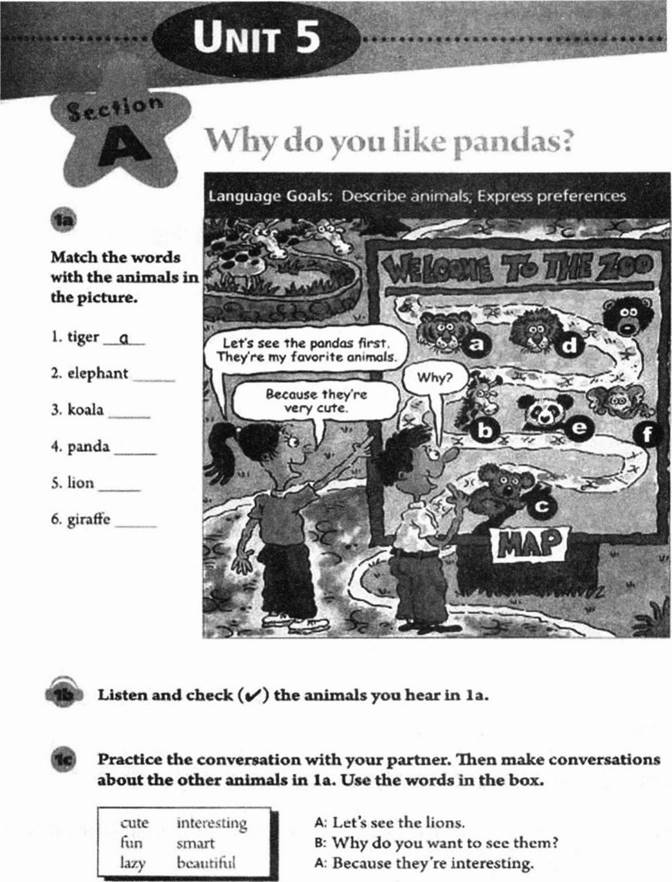
语言素材:
参考答案
暂无
答案解析
【参考设计】
TeachingContents:
Theteaching material for the listening and speaking lesson is a dialogue aboutseeing animals in the zoo.
TeachingObjectives:
(1)Knowledge objectives
①Students can master the words of animals "tiger, elephant, koala, panda,lion, giraffe" and the adjectives "cute,
interesting,fun, smart, lazy, beautiful" .
②Students can master the sentence patterns "--Why do you ...? --Because..." .
(2)Ability objective
Studentscan use the new words and sentence patterns to describe their favorite animals.
(3)Emotional objective
Studentswill develop the awareness of loving animals.
TeachingKey Point:
Studentscan master the words and sentence patterns to describe their favorite animals.
TeachingDifficult Point:
Studentscan use "--Why do you ...? --Because ..." to ask and explain thereasons.
MajorSteps:
Step 1Presentation (9 minutes)
First,the teacher presents the new words about animals such as "tiger, elephant,koala, panda, lion, giraffe" by showing some pictures, and then leadsstudents to read the words aloud.
Next,the teacher lets students listen to the tape of 1 a and complete the task.
Then theteacher presents a map of the zoo and shows some adjectives such as "cute,fun, interesting, clever,smart, lazy, beautiful".
T: Whydo we love dogs? Because they are cute. Why do we love cats?
Ss:Because they are cute.
Theteacher uses the same way to present other adjectives, and tells students theycan use the sentence patterns"--Why do you ...? --Because ..." to askand answer reasons.
(Justification:Using pictures and a map to teach new words and sentences can help studentsunderstand their meanings better. Matching exercise can make students achieve aunity of sound, form and meaning.)
Step 2Practice (6 minutes)
The teacherlets students make conversations in pairs by using the new words about animalsthey have just learned. For example:
A:What's it?
B: It'san elephant.
A: Doyou like it?
B:Yes/No.
Then theteacher lets students show the reasons why they like one animal or not by usingthe adjectives and the sentence patterns. For example:
A: Whydo you love pandas.'?
B:Because they are interesting.
A: Whydo you love tigers.'?
B:Because they are clever.
Afterthe practice, the teacher asks some students to present their dialogues infront of the class.
(Justification:This step enables students to cooperate with each other and practice talkingabout the animals they like or dislike by using the new words and sentencestructures.)
Step 3Production (5 minutes)
The teacherlets students interview some classmates in their groups about what animals theylike or dislike and explain the reasons by using the following sentences:
(1)Which animal do you like?
(2) Whydo you like them?
Then theteacher encourages some volunteers to perform the interview in front of theclass and gives them feedback.
(Justification:This step can improve students' speaking ability and develop their awareness ofloving animals.)
你可能感兴趣的试题
A.******
B.a singer
C.the singer
D.singers
A.as
B.because
C.***
D.that