根据以下材料,回答题
It's familiar enough to be a cliche: the loyal worker who finally retires and then is flummoxed by the prospect of filling unoccupied days.For people whose sense of purpose is wrapped up in their professional identities, life without work is only a pale version of life.
Andrew Yang, currently a USDemocratic presidential candidate and also the founder of job-creationncn profit" Venture for America", expresses some of the common fears about worklessness when he says: It's clear from the data, and common sense,and human experience, that many, many people struggle without work.We're idlemen; we volunteer less, even though we have more time.And over time, we tend to play a lot of video games, and drink more.Society generally fares very poorly without
work."
Yet it isn't universally accepted that paid employment is key to an active life.The Japanese concept ofikigai ( the reason for being alive) expresses happiness in life.Among Japanesewomen and men surveyed in 2010, fewer than one-third equated work with theirikigai.Hobbies, relationships and unpaid wcrk--all of these can add up to arichly meaningful life, one where "retirement" might be a foreign concept.
On the other hand, for many people in precarious employment, on low wages or with limited retirement savings, worrying about purpose outside work may be an unaffordable luxury.Many people simply can't afford to retire early or shorten their work weeks.Forthose who are forced to work less without corresponding public assistance,"leisure time" is likely to be an illusion as they frantically search for ways to supplement their main income.
But the automation of work,awareness of the environmental impact of work and the growing movement for shorter work weeks mean that many of us are likely to be working less in the future.It may be that with less work to go around, boredom will increase, at least initially.But this will have its upsides.
More recreational time baked into a week might keep us from feeling like we need to frantically fill every moment.
At the moment women,especially, tend to be chronically overworked, but much of that"work" isn't valued the way paid employment is.Looking after the kids, tending to ageing parents, and ham dling domestic, social and community responsibilities all take up many hours.Reducing the burden of work might free up time or energy for the unpaid care.Challenging as it can be, allowing women to be
relaxed has benefits for their creativity and well being.
The shorter-week trials that have been conducted suggest that workers with longer weekends used theirextra time for a mix of activities.For a New Zealand financial services firm that last year gave employees the option of a four-day working week, thisincluded more employee time spent golfing, watching Netflix, studying and spending time with family.For a UK PR firm that also instituted a four-day week,one young employee started spending her extra time volunteering with elderly people.
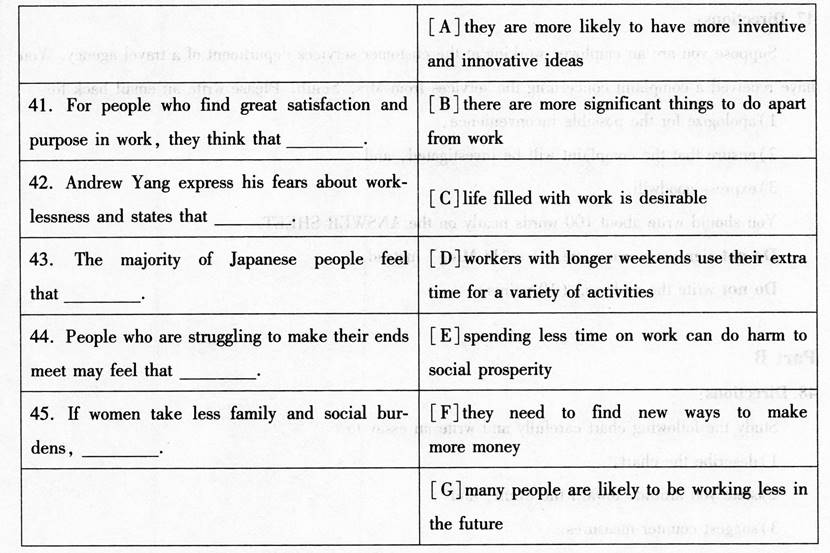
第41题答案是
参考答案
C
答案解析
题目对应信息在第一段最后一句话:For people whose sense of purpose is wrapped up in their professional identities,life without work is only a pale version oflife,意思是,“对于那些以职业身份为目的的人来说,没有工作的生活只是苍白版本的生活”,由此可见,对于那些以工作为乐、把工作视为人生目的的人来说,有工作的生活才是精彩的。