根据以下材料,回答题
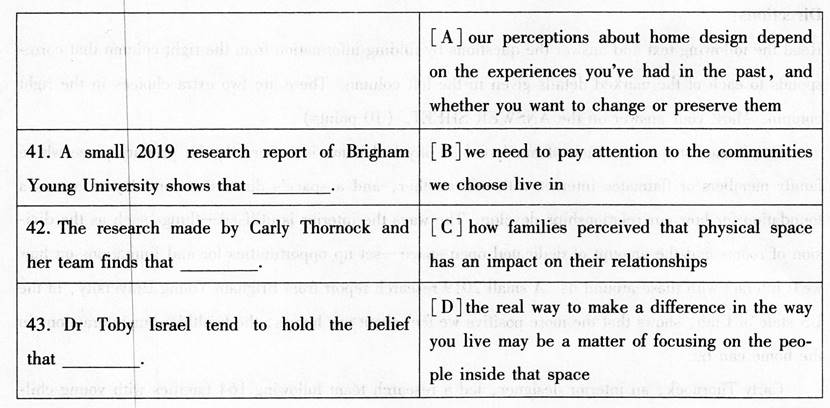
Our homes shapes so much of our lives.A physical home is, after all, the primary place where family members or flatmates interact with one another, and a space's dimensions and layout act as a foundation for how our relationships develop.The ways the interior is utilised things such as the division of rooms and the amount of dedicated open space--set up opportunities for and limitations on how we'll interact with those around us.A small 2019 research report from Brigham Young University, in the US state of Utah, shows that the more positive we feel about our homes, the healthier our interactions in the home can be.
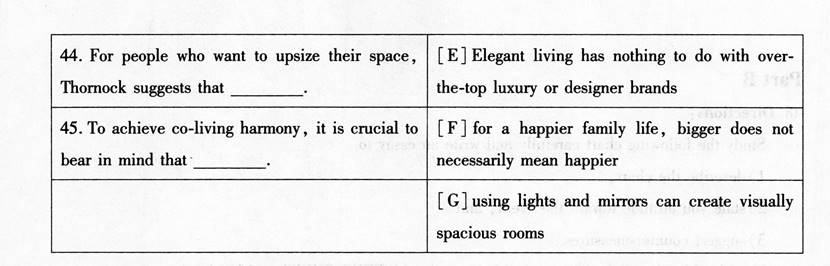
Carly Thornock, an interior designer, led a research team following 164 families with young children in the western US who came from a wide spectrum of home types and income levels.Overtwo years, they observed how their physical environments related to four basic elements of family functio In, acceptance and decision making.The researchers found overall that increases in physical space per person did not correspond to happier families.Perhaps surprisingly, the amount of actual space a home has isn't as important as how the members of the home plan for and use the areas.
Dr Toby Israel, design psychologist and author of Some Place Like Home : Using Design Psychology to Create Ideal Places, believes that every person has a distinctive"environmental autobiography"--our own personal history of place.Although often subconscious, our associations and sensations with physical places are reworked, replicated or rejected throughout our lifetime, she says.Comparing our current
spaces to the homes we grew up in can be a fun and insightful way to learn about our own personal histories of place, Israel says."Very often, people will choose homes with a very similar layout to the homes that they've had in childhood.And sometimes they do something totally different."
It's likely financially prohibitive or just too challenging to simply up size your space because you
want to.But changing our homes for the better is always within reach."As cities grow that rapidly and
there just isn't enough space, you have to get creative on the mindset part because, really, your circumstances might not be changeable," says Thornock.Even if you're in the same physical place, she says, "there's always a way to make even the tiniest space work for you".For instance, Thornock says that if perceived crowding is the issue, you can start by opening the space with lights and mirrors.
Actively lmaking changes in the name of a healthier home means considering both physical space itself as well as how people communicate within it.Whether it's a shared apartment with flatmates, or a full family home, designing our spaces with others in mind is key for reaching co-living harmony.
第41题答案是
参考答案
C
答案解析
题目对应信息在第一段最后一句话:the more positive we feel about our homes.the heartier our interactions in the home can be.意思是“我们对房屋的感觉越积极,我们在家庭中的互动关系就会越健康”,因此,我们可以得出,家庭中的每个人对于房屋布置的感觉会影响到我们在家里的人际关系。