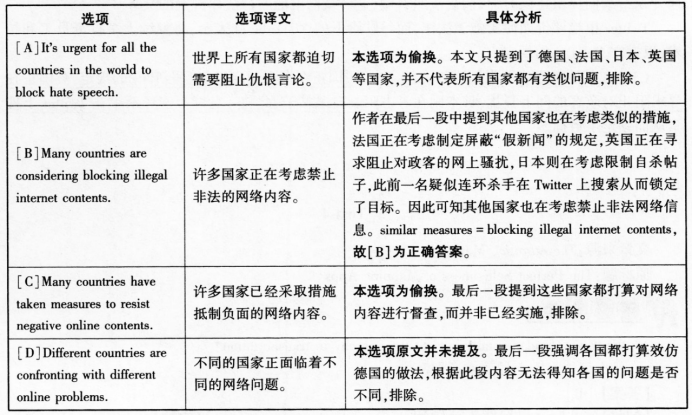
What can be inferred from the last paragraph?
参考答案
B
答案解析
What can be inferred from the last paragraph?
从最后一段可以推断出什么?
推断题。根据题于信息可定位到最后一段。
全文翻译
德国一项法律要求Facebook和Twitter等社交媒体公司迅速删除其网站上的仇恨言论。德国官咧表示,(31)该法律将进行修订,此前有批评称,太多的在线内容被屏蔽了。
该法律于1月1日全面生效,是西方民主国家为控制社交媒体上的内容而作出的最雄心勃勃的努力。该法案旨在确保德国对仇恨言论(包括支持纳粹意识形态的言论)的严厉禁令在网上得以实施,要求网站在24小时内删除被禁内容,否则将面临最高5 000万欧元(合6 200万美元)的罚款。该法律简称为NetzDG,(32)属于国际判例案件,其他考虑采取类似措施的国家正在密切关注此法案的执行情况。
组建新政府的德国政界人士对路透社表示,他们希望增加一项修正案,以帮助网络用户恢复被错误删除的内容。立法者们还敦促社交媒体公司成立一个独立的机构,对公众攻击性内容的报告进行审查和回应,而不是由某个公司自己来做。(33)法律专家表示,这种体系类似于德国的视频游戏监管方式,可能会让人们能够对是否屏蔽某些内容这样的复杂决策更加深思熟虑。
修正提议是随着该法反对者的广泛批评而提出来的,这些反对者包括言论自由活动家和德国记者协会。他们表示,巨额罚金的威胁使互联网企业一味求稳,屏蔽比所需更多的内容。(34)他们指出了几起引人注目的案件,其中包括一家讽刺杂志因在推特上模仿反穆斯林的言论而被屏蔽。
Facebook表示,该公司在德国有l 200名员工,正在负责审核全球l.4万条帖子,调整这些帖子的内容,并且保护账户安全。该公司称他们“争取不屏蔽比所需更多的内容”。“人们认为删除非法内容很容易,但事实并非如此,”Facebook负责EMEA公共政策的副总裁理查德.艾伦如是说。“Facebook会仔细审查NetzDG的每一份报告,并在适当的情况下参考法律部门的意见。法律专家给我们提出建议时,我们会按照着做,这样我们就能履行法律规定的义务。”
Twitter拒绝评价如何实施该法律,而谷歌旗下的YouTube则表示,将继续大举投资员工和技术,以遵守NetzDG的规定。
(35)在其他考虑采取类似措施的国家中,法国正在考虑制定屏蔽“假新闻”的规定,英国正在寻求阻止对政客的网上骚扰,日本则在考虑限制自杀帖子,此前一名疑似连环杀手在Twitter上搜索从而锁定了目标。
从最后一段可以推断出什么?
推断题。根据题于信息可定位到最后一段。
全文翻译
德国一项法律要求Facebook和Twitter等社交媒体公司迅速删除其网站上的仇恨言论。德国官咧表示,(31)该法律将进行修订,此前有批评称,太多的在线内容被屏蔽了。
该法律于1月1日全面生效,是西方民主国家为控制社交媒体上的内容而作出的最雄心勃勃的努力。该法案旨在确保德国对仇恨言论(包括支持纳粹意识形态的言论)的严厉禁令在网上得以实施,要求网站在24小时内删除被禁内容,否则将面临最高5 000万欧元(合6 200万美元)的罚款。该法律简称为NetzDG,(32)属于国际判例案件,其他考虑采取类似措施的国家正在密切关注此法案的执行情况。
组建新政府的德国政界人士对路透社表示,他们希望增加一项修正案,以帮助网络用户恢复被错误删除的内容。立法者们还敦促社交媒体公司成立一个独立的机构,对公众攻击性内容的报告进行审查和回应,而不是由某个公司自己来做。(33)法律专家表示,这种体系类似于德国的视频游戏监管方式,可能会让人们能够对是否屏蔽某些内容这样的复杂决策更加深思熟虑。
修正提议是随着该法反对者的广泛批评而提出来的,这些反对者包括言论自由活动家和德国记者协会。他们表示,巨额罚金的威胁使互联网企业一味求稳,屏蔽比所需更多的内容。(34)他们指出了几起引人注目的案件,其中包括一家讽刺杂志因在推特上模仿反穆斯林的言论而被屏蔽。
Facebook表示,该公司在德国有l 200名员工,正在负责审核全球l.4万条帖子,调整这些帖子的内容,并且保护账户安全。该公司称他们“争取不屏蔽比所需更多的内容”。“人们认为删除非法内容很容易,但事实并非如此,”Facebook负责EMEA公共政策的副总裁理查德.艾伦如是说。“Facebook会仔细审查NetzDG的每一份报告,并在适当的情况下参考法律部门的意见。法律专家给我们提出建议时,我们会按照着做,这样我们就能履行法律规定的义务。”
Twitter拒绝评价如何实施该法律,而谷歌旗下的YouTube则表示,将继续大举投资员工和技术,以遵守NetzDG的规定。
(35)在其他考虑采取类似措施的国家中,法国正在考虑制定屏蔽“假新闻”的规定,英国正在寻求阻止对政客的网上骚扰,日本则在考虑限制自杀帖子,此前一名疑似连环杀手在Twitter上搜索从而锁定了目标。
你可能感兴趣的试题
A.All drivers drive under the guidance of the mobile apps.
B.All drivers choose their fastest and most convenient ways.
C.All drivers pick the freeways and arterial roads.
D.All drivers drive along the back road and country roads.
A.It helps people avoid congestion and keep traffic flowing.
B.It considers the conditions of the whole traffic system.
C.It eases the traffic pressure of the main roads.
D.It increases traffic congestion in general.
A.Skeptical.
B.Approving.
C.Uncertain.
D.Condemning.