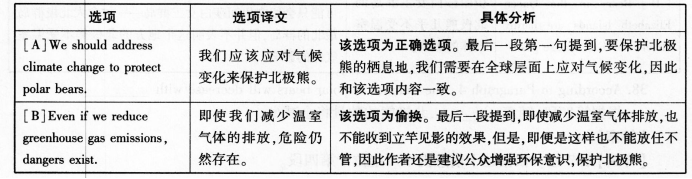
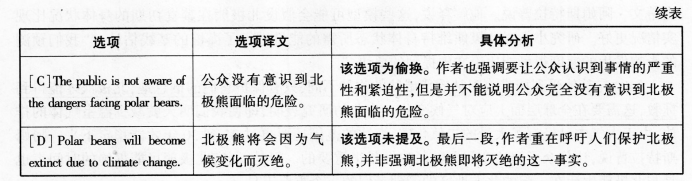
What does the author suggest in the last paragraph?
参考答案
A
答案解析
What does the author suggest in the last paragraph?
作者在最后一段提出了什么建议?
细节题。根据题干信息提示可定位于最后一段。
全文翻译
(36)科学家首次预测了北极熊可能会在何时、何地以及以何种方式消失。他们警告说,如果温室气体排放继续沿着目前的轨迹发展,到2100年,北极地区的北极熊可能会灭绝,只有少数幸免。
根据发表在《自然气候变化》杂志上的一项研究,到2040年,许多北极熊很有可能将开始经历繁殖失败,从而导致局部灭绝。
该研究调查了在两种不同的温室气体排放情景下北极熊会受到怎样的影响。(37)研究人员发现。在正常排放的情况下,到本世纪末,北极熊很可能只会存在于伊丽莎白女王群岛——加拿大北极群岛最北的群岛。即使温室气体排放得到适度缓解,北极的大部分北极熊仍有可能在2080年经历繁殖失败。
据科学家估计,目前只剩下不到26 000只北极熊,它们分布在19个不同的亚种群中,包括从挪威斯瓦尔巴特群岛的冰原,到加拿大的哈德逊湾,再到阿拉斯加和西伯利亚之间的楚科奇海。北极熊无法在陆地上找到足够的食物,只能依靠海冰捕食。它们经常在冰面上盯着海豹的呼吸孔,等待数小时,期待一顿有脂肪的大餐浮出水面。(38)但是由于气候变化,海冰减少,北极熊也会减少。
多伦多斯卡伯勒大学的生物学家、该研究的主要作者彼得·莫尔纳说:“北极熊将有一段时间遭受气候变化的影响,这一点已经很清楚了。”“但我们不完全清楚的是,北极熊的生存和繁殖能力何时会大幅下降,最终导致灭绝。我们不知道这种情况会在本世纪早些时候还是晚些时候发生。”
北极熊利用在冬季狩猎季节积累起来的能量储备来度过贫瘠的夏季,或者在贫瘠的水域冰面上度过时光。(39)虽然北极熊习惯了几个月的禁食,但如果它们被迫长时间不进食,它们的身体状况、繁殖能力和生存能力最终将下降。在阿拉斯加南部的波弗特海,生物学家已经看到由于北极熊被迫长时间禁食,它们的数量在低冰期下降了25—50%。而在最南端的北极熊栖息地之一的西哈德逊湾.其数量自1987年以来已经减少了大约30%。
为了计算出北极熊什么时候会达到临界生理极限,莫尔纳和他的同事们估计了北极熊可以有多瘦和多胖,并模拟北极熊的能量消耗,以得出在幼崽和成年北极熊的存活率下降之前,它们可以禁食的临界天数。然后,他们将这些阈值与预测的未来海洋无冰天数结合起来,以确定北极不同地区的北极熊数量将受到怎样的影响。
“即使我们减少排放,我们仍然会看到一些亚种群在本世纪末灭绝,”莫尔纳说。这包括在西部哈德逊湾、戴维斯海峡和南部哈德逊湾等地脆弱的、最南端的冰区的北极熊。“但到本世纪末,即使北极熊繁殖减少,但与正常排放情况相比,会有更多的北极熊存活。”
“必须强调的是,这些预测可能是保守的,”国际北极熊组织的首席科学家、该研究的合著者史蒂文·阿姆斯特拉普说。他解释说,这些模型可能会假设北极熊在禁食初期的身体状况比现实情况更好。研究小组对北极熊维持身体状态所需的能量进行了谨慎的基线估计。“我们预测的影响发生的速度很可能比论文中提到的要快。”
(40)与其他受到捕猎或森林砍伐威胁的物种不同,只有保护它们的栖息地,北极熊才能得到拯救,这需要在全球层面上应对气候变化。先前的研究表明,即使我们明天就减少温室气体的排放,由于大气中已经有了大量的二氧化碳,海冰的范围还要再过25到30年才能稳定下来。阿姆斯特拉普说,让公众了解这个问题的紧迫性是很重要的。但是,制定北极熊可能灭绝的时间表也是与北极熊生活在一起的北方地区的管理者们的一个重要工具。
作者在最后一段提出了什么建议?
细节题。根据题干信息提示可定位于最后一段。
全文翻译
(36)科学家首次预测了北极熊可能会在何时、何地以及以何种方式消失。他们警告说,如果温室气体排放继续沿着目前的轨迹发展,到2100年,北极地区的北极熊可能会灭绝,只有少数幸免。
根据发表在《自然气候变化》杂志上的一项研究,到2040年,许多北极熊很有可能将开始经历繁殖失败,从而导致局部灭绝。
该研究调查了在两种不同的温室气体排放情景下北极熊会受到怎样的影响。(37)研究人员发现。在正常排放的情况下,到本世纪末,北极熊很可能只会存在于伊丽莎白女王群岛——加拿大北极群岛最北的群岛。即使温室气体排放得到适度缓解,北极的大部分北极熊仍有可能在2080年经历繁殖失败。
据科学家估计,目前只剩下不到26 000只北极熊,它们分布在19个不同的亚种群中,包括从挪威斯瓦尔巴特群岛的冰原,到加拿大的哈德逊湾,再到阿拉斯加和西伯利亚之间的楚科奇海。北极熊无法在陆地上找到足够的食物,只能依靠海冰捕食。它们经常在冰面上盯着海豹的呼吸孔,等待数小时,期待一顿有脂肪的大餐浮出水面。(38)但是由于气候变化,海冰减少,北极熊也会减少。
多伦多斯卡伯勒大学的生物学家、该研究的主要作者彼得·莫尔纳说:“北极熊将有一段时间遭受气候变化的影响,这一点已经很清楚了。”“但我们不完全清楚的是,北极熊的生存和繁殖能力何时会大幅下降,最终导致灭绝。我们不知道这种情况会在本世纪早些时候还是晚些时候发生。”
北极熊利用在冬季狩猎季节积累起来的能量储备来度过贫瘠的夏季,或者在贫瘠的水域冰面上度过时光。(39)虽然北极熊习惯了几个月的禁食,但如果它们被迫长时间不进食,它们的身体状况、繁殖能力和生存能力最终将下降。在阿拉斯加南部的波弗特海,生物学家已经看到由于北极熊被迫长时间禁食,它们的数量在低冰期下降了25—50%。而在最南端的北极熊栖息地之一的西哈德逊湾.其数量自1987年以来已经减少了大约30%。
为了计算出北极熊什么时候会达到临界生理极限,莫尔纳和他的同事们估计了北极熊可以有多瘦和多胖,并模拟北极熊的能量消耗,以得出在幼崽和成年北极熊的存活率下降之前,它们可以禁食的临界天数。然后,他们将这些阈值与预测的未来海洋无冰天数结合起来,以确定北极不同地区的北极熊数量将受到怎样的影响。
“即使我们减少排放,我们仍然会看到一些亚种群在本世纪末灭绝,”莫尔纳说。这包括在西部哈德逊湾、戴维斯海峡和南部哈德逊湾等地脆弱的、最南端的冰区的北极熊。“但到本世纪末,即使北极熊繁殖减少,但与正常排放情况相比,会有更多的北极熊存活。”
“必须强调的是,这些预测可能是保守的,”国际北极熊组织的首席科学家、该研究的合著者史蒂文·阿姆斯特拉普说。他解释说,这些模型可能会假设北极熊在禁食初期的身体状况比现实情况更好。研究小组对北极熊维持身体状态所需的能量进行了谨慎的基线估计。“我们预测的影响发生的速度很可能比论文中提到的要快。”
(40)与其他受到捕猎或森林砍伐威胁的物种不同,只有保护它们的栖息地,北极熊才能得到拯救,这需要在全球层面上应对气候变化。先前的研究表明,即使我们明天就减少温室气体的排放,由于大气中已经有了大量的二氧化碳,海冰的范围还要再过25到30年才能稳定下来。阿姆斯特拉普说,让公众了解这个问题的紧迫性是很重要的。但是,制定北极熊可能灭绝的时间表也是与北极熊生活在一起的北方地区的管理者们的一个重要工具。
