What can we infer from the last paragraph?
参考答案
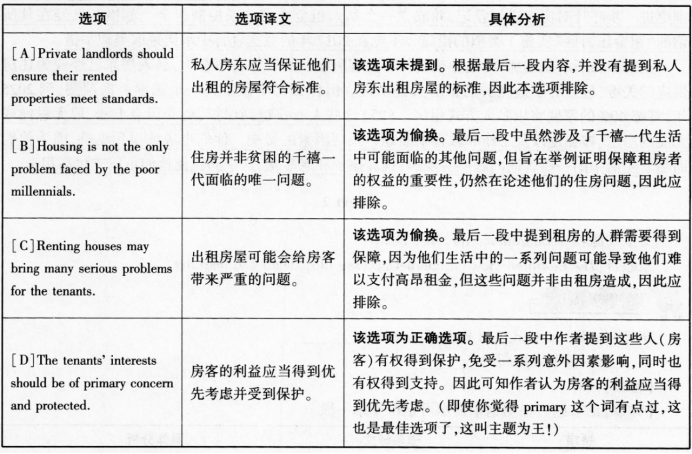
D
答案解析
What can We infer from the last paragraph?
从最后一段中我们可以得出什么信息?
推断题。根据题干信息可定位到最后一段。
全文翻译
英国功能失调的房地产市场——或者更准确地说,市场——是一个影响所有年龄段人群的问题。(21)但20世纪80年代初至90年代中期出生的千禧一代的困境值得特别关注。这些人现在二三十岁,与之前的几代人相比,他们不太可能租到或买得起房子——尤其是在伦敦、爱丁堡、牛津或英国其他热点地区。那些上大学的人负债累累,尤其是自2010年学费上涨至每年9 000英镑以来。本周,一份议会报告称,长期缺乏经济适用房意味着其中63万人将步人无家可归的晚年。
如何扭转这种局面,让千禧一代获得良好的生活水平,包括有保障的住房使用权和由此带来的自由,这不仅是政策制定者需要考虑的问题,也是选民需要考虑的问题。(22)一个好的社会应该努力实现代际公平,这是一个原则问题,也因为我们年老时要依靠年轻人来照顾我们。如果由于前几代人未能与他们的后代分享机会和资源,这种传统被打破,这将是极其有害的。
住房并不是公共政策中唯一涉及代际问题的领域。但私人租房者数量的大幅增长(从2007年的280万户增至2017年的450万户),再加上25至34岁的人占私人租房者总数的三分之一以上,使其成为一个重要问题。甚至对于390万住户来说——他们的房东要么是地方议会要么是住房协会,所以较少面临房租上涨——(23)房价上涨扩大了有无财产人群之间的地位和资源差距。自20世纪90年代中期以来,所谓的房价上涨不仅扩大了现有的不平等,而且还创造了新的不平等。政府的“帮助购买”计划让事情变得更糟,而不是更好。这并不意味着没有富裕父母的年轻人不应该有机会踏上买房的第一步。他们有。
但是,拥有住房并不是最重要的。就连我们厌恶监管的政府也迟迟才认识到,私人租赁领域的问题不能再被忽视,并就取消无过失驱逐展开了磋商。(24)伦敦市长萨迪克·汗本周的报告则更进一步呼吁对房东进行登记,并成立一个私人租金委员会来控制租金。苏格兰已经在其所谓的“租金压力区”实施了类似的措施。工党在2017年的竞选宣言中承诺采取类似举措。
正如市长所承认的那样,这种改变并非没有风险。不管你喜不喜欢,私人房东已经成为住房供应的关键.包括对于最脆弱的租房人群来说。但什么都不做不是一个选项。据预测,到2025年.首都40%的家庭将以私人方式租房。(25)这些人有权得到保护,免受租金上涨、肆无忌惮或无能的房东、被驱逐以及工作和教育中断等一系列因素的影响。他们也应该得到支持,因为他们面临着生活中的一些普通问题——疾病、抚养孩子和老龄化,这些问题使他们难以支付高租金。
从最后一段中我们可以得出什么信息?
推断题。根据题干信息可定位到最后一段。
全文翻译
英国功能失调的房地产市场——或者更准确地说,市场——是一个影响所有年龄段人群的问题。(21)但20世纪80年代初至90年代中期出生的千禧一代的困境值得特别关注。这些人现在二三十岁,与之前的几代人相比,他们不太可能租到或买得起房子——尤其是在伦敦、爱丁堡、牛津或英国其他热点地区。那些上大学的人负债累累,尤其是自2010年学费上涨至每年9 000英镑以来。本周,一份议会报告称,长期缺乏经济适用房意味着其中63万人将步人无家可归的晚年。
如何扭转这种局面,让千禧一代获得良好的生活水平,包括有保障的住房使用权和由此带来的自由,这不仅是政策制定者需要考虑的问题,也是选民需要考虑的问题。(22)一个好的社会应该努力实现代际公平,这是一个原则问题,也因为我们年老时要依靠年轻人来照顾我们。如果由于前几代人未能与他们的后代分享机会和资源,这种传统被打破,这将是极其有害的。
住房并不是公共政策中唯一涉及代际问题的领域。但私人租房者数量的大幅增长(从2007年的280万户增至2017年的450万户),再加上25至34岁的人占私人租房者总数的三分之一以上,使其成为一个重要问题。甚至对于390万住户来说——他们的房东要么是地方议会要么是住房协会,所以较少面临房租上涨——(23)房价上涨扩大了有无财产人群之间的地位和资源差距。自20世纪90年代中期以来,所谓的房价上涨不仅扩大了现有的不平等,而且还创造了新的不平等。政府的“帮助购买”计划让事情变得更糟,而不是更好。这并不意味着没有富裕父母的年轻人不应该有机会踏上买房的第一步。他们有。
但是,拥有住房并不是最重要的。就连我们厌恶监管的政府也迟迟才认识到,私人租赁领域的问题不能再被忽视,并就取消无过失驱逐展开了磋商。(24)伦敦市长萨迪克·汗本周的报告则更进一步呼吁对房东进行登记,并成立一个私人租金委员会来控制租金。苏格兰已经在其所谓的“租金压力区”实施了类似的措施。工党在2017年的竞选宣言中承诺采取类似举措。
正如市长所承认的那样,这种改变并非没有风险。不管你喜不喜欢,私人房东已经成为住房供应的关键.包括对于最脆弱的租房人群来说。但什么都不做不是一个选项。据预测,到2025年.首都40%的家庭将以私人方式租房。(25)这些人有权得到保护,免受租金上涨、肆无忌惮或无能的房东、被驱逐以及工作和教育中断等一系列因素的影响。他们也应该得到支持,因为他们面临着生活中的一些普通问题——疾病、抚养孩子和老龄化,这些问题使他们难以支付高租金。
你可能感兴趣的试题
A.the smartphone makes people's life more convenient
B.our ability to socialize is greatly determined by our wealth
C.people with better living conditions are more likely to be sociable
D.people with speedy broadb and packages and less dependence on smartphones live more comfortably
A.access to internet varies greatly in different countries
B.internet is a necessity for people to participate in society
C.countries must be fully involved in combating the epidemic
D.Internet plays a crucial role in fighting against the epidemic
A.Tim Berners and Philip Alston hold opposite opinion in increasing access.
B.The households with lower incomes in Britain have worse internet access.
C.Most of the British households are heavily dependent on digital technology.
D.British households are not allowed to use mobile broadband while at home.