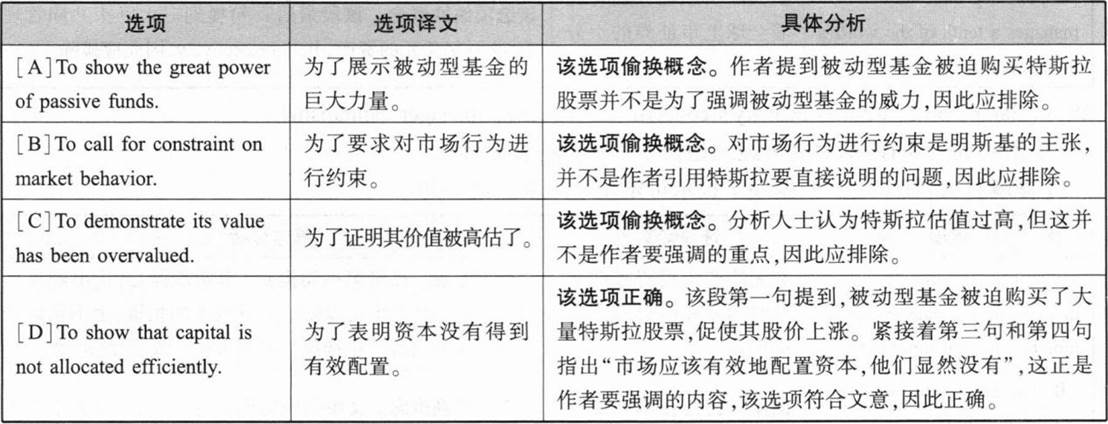
Why does the author mention the example of Tesla?
参考答案
C
答案解析
Why does the author mention the example of Tesla?
作者为什么提到特斯拉这个例子?
推理题。根据题干关键词Tesla可定位于最后一段。
【翻译】
已故经济学家海曼·明斯基是研究金融对美国经济控制及其对社会影响的先驱。20世纪80年代,他预言了“货币经理型资本主义”的兴起,并预言机构投资者将成为宇宙的主宰。(26)如今,我们身处于一个“货币机器经理型资本主义”的世界,在这个世界里,算法控制着证券的买卖。那些被雇来挑选股票的人——也许注意到他们的推销辞令被削弱了——声称这种被动投资非常糟糕。这些批评并没有阻止机器人的崛起。
这种做法的先驱是全球最大的资产管理公司美国黑岩集团,该公司去年还成为英国最大的资产管理公司。(27)人类仍然为计算机设定规则,但人工智能正在模糊这两者的区别。计算机操作投资组合——这些投资组合提供自动跟踪股票和债券指数的廉价“交易型开放式指数基金”。这种做法非常成功,以至于三大券商——美国的黑岩集团、先锋集团和道富集团——如今管理着19万亿美元的资产.而这些资产约占全球上市证券的十分之一。
智库“共同财富”本周发布的一份报告显示.过去l0年里,三大巨头在富时100指数成分股公司中的平均持股比例达到12%,几乎翻了一番,而传统基金则节节败落。在富时100指数成分股公司中,三分之二的公司由黑岩集团和先锋集团共同控股,其持股比例达10%,甚至更多。在美国,这三家公司平均持有五分之一的标准普尔500指数成份股公司。与富时指数公司相比,他们有更多的资金来追踪美国标准普尔指数——该指数在股市崩盘后上涨了约150%,而富时指数只上涨了约5%。
三大巨头之所以持有一家公司的股票,是因为他们所追踪的指数需要他们这样做,而不是为了提升这家公司的业绩。尽管像黑岩集团这样的公司拥有相当大的股东投票权,但正如一项分析显示的那样.他们往往“盲目”听从管理层的建议,批准过高的CE0薪酬方案。有些人会问,如果他们持有几家大公司的股份.为什么还要促进它们之间的竞争呢?黑岩集团表示,它将推动董事会保护市场环境.但对于那些不这么做的董事会.也没有表示这会带来任何实质性的后果。
(28)明斯基担心,货币经理型资本主义不会产生足以创造充分就业的投资,也不足以产生实质性的创新。事实依然如此:国家在很大程度上是技术革命背后的驱动力,而工人的不安全感似乎是被动投资体现的另一面。在英国,以持股比例为参照,黑岩集团从其富时指数成分股中提取了约50亿英镑股息.英国最大公司的全球雇员每人可获得约1000英镑股息。黑岩集团的主导地位可能会导致其垮台。这或许可以解释为什么该公司每年向前保守党财政大臣乔治·奥斯本支付65万英镑,并游说议员反对限制其活动的法规。
在颇具影响力的“危机笔记”博客上,约翰内斯·佩特里、简·菲希特纳和伊尔克·希姆斯克去年警告称,一个新时代即将到来,那时候“金融市场将逐渐由指数所左右,而非投资者”。在一篇论文中,学者们说如今的资本主义正被“新的永久万能所有者”掌控,这些人无限期地投资于数千家国际股票指数成员公司,只有在指数构成发生变化时才会撤资。(29)其影响在全球范围内具有变革性和破坏性。
学者们指出,去年12月,在宣布特斯拉将被纳入标准普尔500指数的一周内,由于被动型基金被迫购买了700多亿美元的特斯拉股票,特斯拉的股价上涨了33%。这让埃隆·马斯克暂时成为世界首富,尽管分析人士称他的公司估值过高。(30)市场应该有效地配置资本,他们显然没有。社会正在经历不平等和金融不稳定。明斯基认为,必须约束市场行为,以确保“民主的经济基础”。他的建议在今天看来比以往任何时候都更正确。
作者为什么提到特斯拉这个例子?
推理题。根据题干关键词Tesla可定位于最后一段。
【翻译】
已故经济学家海曼·明斯基是研究金融对美国经济控制及其对社会影响的先驱。20世纪80年代,他预言了“货币经理型资本主义”的兴起,并预言机构投资者将成为宇宙的主宰。(26)如今,我们身处于一个“货币机器经理型资本主义”的世界,在这个世界里,算法控制着证券的买卖。那些被雇来挑选股票的人——也许注意到他们的推销辞令被削弱了——声称这种被动投资非常糟糕。这些批评并没有阻止机器人的崛起。
这种做法的先驱是全球最大的资产管理公司美国黑岩集团,该公司去年还成为英国最大的资产管理公司。(27)人类仍然为计算机设定规则,但人工智能正在模糊这两者的区别。计算机操作投资组合——这些投资组合提供自动跟踪股票和债券指数的廉价“交易型开放式指数基金”。这种做法非常成功,以至于三大券商——美国的黑岩集团、先锋集团和道富集团——如今管理着19万亿美元的资产.而这些资产约占全球上市证券的十分之一。
智库“共同财富”本周发布的一份报告显示.过去l0年里,三大巨头在富时100指数成分股公司中的平均持股比例达到12%,几乎翻了一番,而传统基金则节节败落。在富时100指数成分股公司中,三分之二的公司由黑岩集团和先锋集团共同控股,其持股比例达10%,甚至更多。在美国,这三家公司平均持有五分之一的标准普尔500指数成份股公司。与富时指数公司相比,他们有更多的资金来追踪美国标准普尔指数——该指数在股市崩盘后上涨了约150%,而富时指数只上涨了约5%。
三大巨头之所以持有一家公司的股票,是因为他们所追踪的指数需要他们这样做,而不是为了提升这家公司的业绩。尽管像黑岩集团这样的公司拥有相当大的股东投票权,但正如一项分析显示的那样.他们往往“盲目”听从管理层的建议,批准过高的CE0薪酬方案。有些人会问,如果他们持有几家大公司的股份.为什么还要促进它们之间的竞争呢?黑岩集团表示,它将推动董事会保护市场环境.但对于那些不这么做的董事会.也没有表示这会带来任何实质性的后果。
(28)明斯基担心,货币经理型资本主义不会产生足以创造充分就业的投资,也不足以产生实质性的创新。事实依然如此:国家在很大程度上是技术革命背后的驱动力,而工人的不安全感似乎是被动投资体现的另一面。在英国,以持股比例为参照,黑岩集团从其富时指数成分股中提取了约50亿英镑股息.英国最大公司的全球雇员每人可获得约1000英镑股息。黑岩集团的主导地位可能会导致其垮台。这或许可以解释为什么该公司每年向前保守党财政大臣乔治·奥斯本支付65万英镑,并游说议员反对限制其活动的法规。
在颇具影响力的“危机笔记”博客上,约翰内斯·佩特里、简·菲希特纳和伊尔克·希姆斯克去年警告称,一个新时代即将到来,那时候“金融市场将逐渐由指数所左右,而非投资者”。在一篇论文中,学者们说如今的资本主义正被“新的永久万能所有者”掌控,这些人无限期地投资于数千家国际股票指数成员公司,只有在指数构成发生变化时才会撤资。(29)其影响在全球范围内具有变革性和破坏性。
学者们指出,去年12月,在宣布特斯拉将被纳入标准普尔500指数的一周内,由于被动型基金被迫购买了700多亿美元的特斯拉股票,特斯拉的股价上涨了33%。这让埃隆·马斯克暂时成为世界首富,尽管分析人士称他的公司估值过高。(30)市场应该有效地配置资本,他们显然没有。社会正在经历不平等和金融不稳定。明斯基认为,必须约束市场行为,以确保“民主的经济基础”。他的建议在今天看来比以往任何时候都更正确。
你可能感兴趣的试题
A.Places where the climate is suitable for humans to live in.
B.Places where humans plan to settle down in the future.
C.Places where the climate is comfortable for all creatures.
D.Places where the climate is completely unlivable.
A.frustrated
B.scared
C.suspicious
D.astonished
A.This paper views climate change as a problem of physics.
B.This paper points out that climate change is a result of human activities.
C.This paper focuses on the influence of climate change on the human habitat.
D.The findings of this paper are far more staggering than those of previous studies.