What did Lambertin[mention at the end of the passage?
参考答案
D
答案解析
What did Lambertini mention at the end of the passage?
兰博蒂尼在文章的最后提到了什么?
细节题。根据题干关键词Lambertini可定位于最后一段。
【翻译】
(26)联合国周五宣布,全球几乎所有国家都达成了一项协议,旨在限制向较贫穷的国家运送难以回收的塑料垃圾。包括美国在内的出口国现在必须获得接收污染的、混合的或不可回收的塑料垃圾的国家的同意(才能把塑料垃圾运往该国)。目前,美国和其他国家可以在没有获得政府批准的情况下,将质量较低的塑料垃圾运送给发展中国家的私人实体。
活动人士表示.自从中国停止接受从美国回收的塑料垃圾以来,他们观察到发展中国家的塑料垃圾堆积如山。全球焚化炉替代方案联盟(Gaia)是这项协议的支持者之一,该联盟表示,他们发现印度尼西亚、泰国和马来西亚的村庄“在一年的时间里变成了垃圾填埋场”。Gaia的女发言人克莱尔·阿金说。“我们发现,来自美国的垃圾堆积在这些国家的村庄里,而这些村庄曾经是主要的农业社区。”
这个具有法律约束力的协议是在由联合国主持召开的为期两周的公约会议结束时产生的——该会议讨论的主题是对地球上海洋和生物产生威胁的塑料垃圾和有毒危险化学品。该协议是《巴塞尔公约》的一项修正案。美国不是该公约的缔约方,因此没有进行投票。但参会人员表示,(27)美国反对这一改变,称官员们不理解这将对塑料垃圾贸易产生的影响。
(28)不仅原始的土地上堆满了塑料垃圾,就连海洋中也漂浮着大量塑料垃圾,而这些塑料垃圾正缠绕并危及着野生动物。价值较低、回收难度较大的塑料最终可能会被丢弃,而不是转化为新产品。该协议影响到医疗保健、科技、航空航天、时尚以及食品和饮料等多个行业使用的产品。
联合国环境规划署的罗尔夫·佩埃特称这项由l87个国家根据公约在瑞士日内瓦签署的协议是“历史性的”,因为各国必须监控塑料垃圾离开其国境后的去向。佩埃特说,谈判于11天前开始,共有1 400名代表参加,并且谈判的进展远超预期。《巴塞尔公约》为第一世界国家向较不富裕的国家运送有害垃圾制订了规则。支持者表示,该修正案将使全球塑料垃圾贸易更加透明,并且得到更好的监管.从而保护人类和环境。
(29)官员们将这一进展部分归因于公众越来越意识到塑料污染的危害,尤其是对海洋生物的危害。英国博物学家大卫·阿滕伯勒爵士等人拍摄的纪录片强化了这一意识。
“摆脱塑料”组织的全球协调员冯·埃尔南德斯表示.该协议是“阻止发展中国家成为全球塑料垃圾(特别是来自富裕国家的塑料垃圾)的倾倒场至关重要的第一步。”
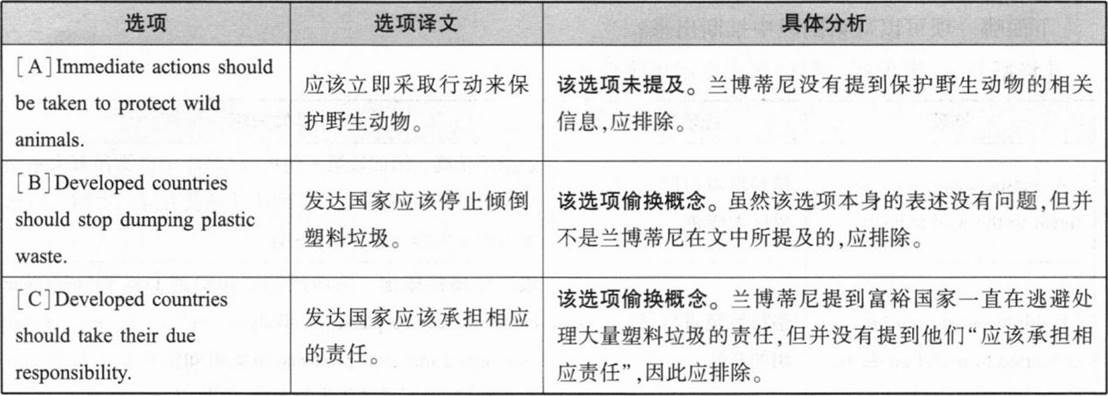
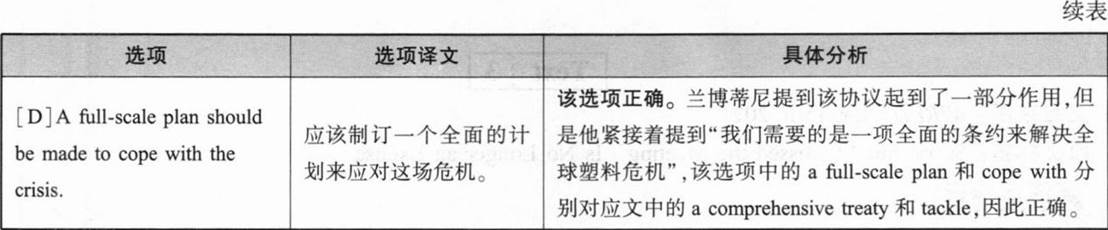
环保和野生动物慈善组织世界野生动物基金会的总干事马尔科·兰博蒂尼说.该协议是可喜的一步,长期以来,富裕国家一直在逃避处理大量塑料垃圾的责任。(30)兰博蒂尼补充道,“然而,这只起到了一部分作用。我们——以及我们所居住的地球——需要的是一项全面的条约来解决全球塑料危机。”
兰博蒂尼在文章的最后提到了什么?
细节题。根据题干关键词Lambertini可定位于最后一段。
【翻译】
(26)联合国周五宣布,全球几乎所有国家都达成了一项协议,旨在限制向较贫穷的国家运送难以回收的塑料垃圾。包括美国在内的出口国现在必须获得接收污染的、混合的或不可回收的塑料垃圾的国家的同意(才能把塑料垃圾运往该国)。目前,美国和其他国家可以在没有获得政府批准的情况下,将质量较低的塑料垃圾运送给发展中国家的私人实体。
活动人士表示.自从中国停止接受从美国回收的塑料垃圾以来,他们观察到发展中国家的塑料垃圾堆积如山。全球焚化炉替代方案联盟(Gaia)是这项协议的支持者之一,该联盟表示,他们发现印度尼西亚、泰国和马来西亚的村庄“在一年的时间里变成了垃圾填埋场”。Gaia的女发言人克莱尔·阿金说。“我们发现,来自美国的垃圾堆积在这些国家的村庄里,而这些村庄曾经是主要的农业社区。”
这个具有法律约束力的协议是在由联合国主持召开的为期两周的公约会议结束时产生的——该会议讨论的主题是对地球上海洋和生物产生威胁的塑料垃圾和有毒危险化学品。该协议是《巴塞尔公约》的一项修正案。美国不是该公约的缔约方,因此没有进行投票。但参会人员表示,(27)美国反对这一改变,称官员们不理解这将对塑料垃圾贸易产生的影响。
(28)不仅原始的土地上堆满了塑料垃圾,就连海洋中也漂浮着大量塑料垃圾,而这些塑料垃圾正缠绕并危及着野生动物。价值较低、回收难度较大的塑料最终可能会被丢弃,而不是转化为新产品。该协议影响到医疗保健、科技、航空航天、时尚以及食品和饮料等多个行业使用的产品。
联合国环境规划署的罗尔夫·佩埃特称这项由l87个国家根据公约在瑞士日内瓦签署的协议是“历史性的”,因为各国必须监控塑料垃圾离开其国境后的去向。佩埃特说,谈判于11天前开始,共有1 400名代表参加,并且谈判的进展远超预期。《巴塞尔公约》为第一世界国家向较不富裕的国家运送有害垃圾制订了规则。支持者表示,该修正案将使全球塑料垃圾贸易更加透明,并且得到更好的监管.从而保护人类和环境。
(29)官员们将这一进展部分归因于公众越来越意识到塑料污染的危害,尤其是对海洋生物的危害。英国博物学家大卫·阿滕伯勒爵士等人拍摄的纪录片强化了这一意识。
“摆脱塑料”组织的全球协调员冯·埃尔南德斯表示.该协议是“阻止发展中国家成为全球塑料垃圾(特别是来自富裕国家的塑料垃圾)的倾倒场至关重要的第一步。”
环保和野生动物慈善组织世界野生动物基金会的总干事马尔科·兰博蒂尼说.该协议是可喜的一步,长期以来,富裕国家一直在逃避处理大量塑料垃圾的责任。(30)兰博蒂尼补充道,“然而,这只起到了一部分作用。我们——以及我们所居住的地球——需要的是一项全面的条约来解决全球塑料危机。”
你可能感兴趣的试题
A.It can take notes like robots during the meeting.
B.It enables all the workers to have online meetings.
C.It can record all the speakers' presentations in the meeting.
D.It can make recording and transcribe it automatically.
A.They don't support interaction.
B.It's not easy to protect and store them.
C.It is hard to analyze and browse them.
D.They will discourage kids from reading.
A.the changes in people's work style
B.the working mechanics of Otter
C.the effect of Otter on people's work
D.the working content of a consultant