In the last paragraph, the author believes
参考答案
C
答案解析
In the last paragraph.the author believes
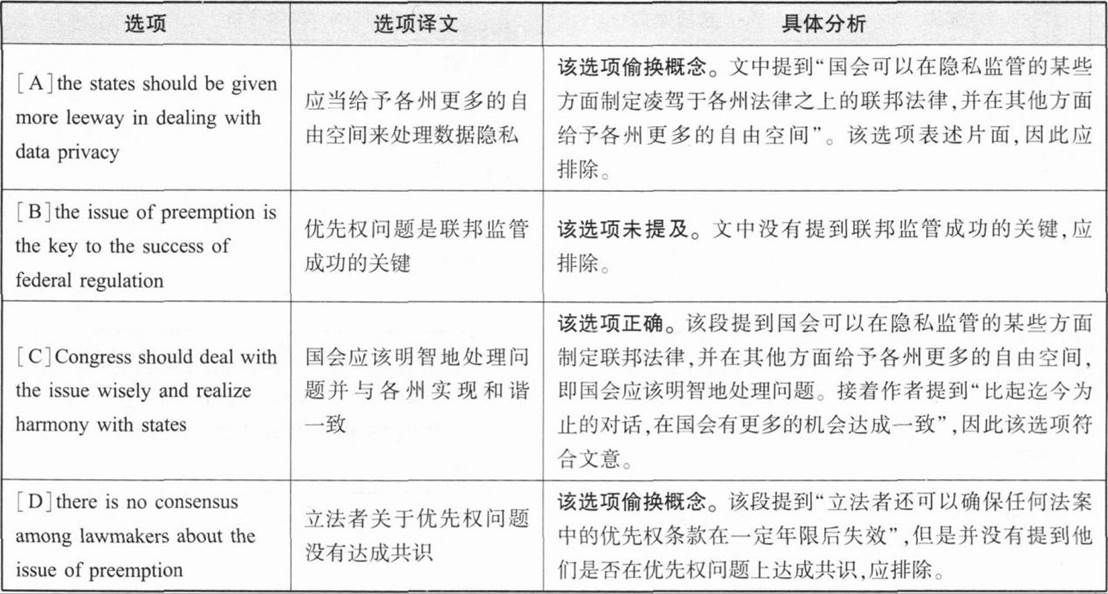
根据最后一段,作者认为_______。
细节题。根据题干提示可定位于最后一段。
【 全文翻译】
国会终于开始研究数据隐私问题了。众议院星期二就这个问题举行了听证会,接着参议院星期三也举行了听证会。行业团体和拥护者的证词预示了立法者可能会调查的大量热门话题,其包括从歧视性定价到对处理某些类型数据的限制。(31)但是立法者们在优先权(联邦法律是否应该取代各州法律)的问题上分歧最大。或许这听起来像是一个诉讼程序性细节,但却非常重要。
那些支持国会凌驾于州标准之上或优先于各州标;隹的人声称,地方保护制度“拼凑”在一起后过于复杂,以至于公司无法遵守。(32)科技公司希望对美国各地的隐私问题采取统一的方式,如同欧盟试图通过《通用数据保护条例》来实现各成员国的隐私和数据保护一样。到目前为止,国会的共和党人似乎倾向于同意这一观点。隐私倡导者反驳说,推动优先权是一种自私的策略,目的在于使更严格的法规失去效力,比如去年夏天签署成为法律的《加州;肖费者保护法》中的规定。那项立法的支持者认为,其法律保护措施将在全国范围内逐步实施,正如加州提高汽车排放标准之后,全国范围内出现了更多的环保汽车一样。
(33)优先权有其合理之处,但应对不同的数据管理机制与应对不同的建筑规范是不同的,因为数据必然会跨越国界。对于公司来说.绕过这个难题的另一种选择是确定最严格的一套规则(比如加州的),并将其运用于所有地方。但是,允许一个州决定全国消费者的体验,这将在理论层面上遭到反对。还有一些实际障碍:隐私法比汽车尾气排放更复杂。一个州的规定可能与另一个州的规定相冲突,决定哪个州的规定是“最严格的”并不像听起来那么容易。
不过,一个缺乏活力的联邦隐私制度——在没有提供可行替代方案的情况下会使州政府的努力付之一炬——会让每个人的处境更糟。(34)如果国会只能就薄弱的规则达成一致,更好的办法是设定一个基线,让各州据此改进。毕竟,支持这样一个方案的理由是,技术发展得很快,而国会从历史层面上来看并非如此,而且各州或许可以更加灵活地应对。有时地方层面的试验会激发国会制定出更明智的政策。
迄今为止,优先权一直被视为一个“全有或全无”的命题,但并非只能如此。(35)国会可以在隐私监管的某些方面制定凌驾于各州法律之上的联邦法律.并在其他方面给予各州更多的自由空间。立法者还可以确保任何法案中的优先权条款在一定年限后失效,这样国会就可以评估联邦监管是否成功,以及技术进步是否需要新的保护。比起迄今为止的对话,在国会有更多的机会达成一致。
根据最后一段,作者认为_______。
细节题。根据题干提示可定位于最后一段。
【 全文翻译】
国会终于开始研究数据隐私问题了。众议院星期二就这个问题举行了听证会,接着参议院星期三也举行了听证会。行业团体和拥护者的证词预示了立法者可能会调查的大量热门话题,其包括从歧视性定价到对处理某些类型数据的限制。(31)但是立法者们在优先权(联邦法律是否应该取代各州法律)的问题上分歧最大。或许这听起来像是一个诉讼程序性细节,但却非常重要。
那些支持国会凌驾于州标准之上或优先于各州标;隹的人声称,地方保护制度“拼凑”在一起后过于复杂,以至于公司无法遵守。(32)科技公司希望对美国各地的隐私问题采取统一的方式,如同欧盟试图通过《通用数据保护条例》来实现各成员国的隐私和数据保护一样。到目前为止,国会的共和党人似乎倾向于同意这一观点。隐私倡导者反驳说,推动优先权是一种自私的策略,目的在于使更严格的法规失去效力,比如去年夏天签署成为法律的《加州;肖费者保护法》中的规定。那项立法的支持者认为,其法律保护措施将在全国范围内逐步实施,正如加州提高汽车排放标准之后,全国范围内出现了更多的环保汽车一样。
(33)优先权有其合理之处,但应对不同的数据管理机制与应对不同的建筑规范是不同的,因为数据必然会跨越国界。对于公司来说.绕过这个难题的另一种选择是确定最严格的一套规则(比如加州的),并将其运用于所有地方。但是,允许一个州决定全国消费者的体验,这将在理论层面上遭到反对。还有一些实际障碍:隐私法比汽车尾气排放更复杂。一个州的规定可能与另一个州的规定相冲突,决定哪个州的规定是“最严格的”并不像听起来那么容易。
不过,一个缺乏活力的联邦隐私制度——在没有提供可行替代方案的情况下会使州政府的努力付之一炬——会让每个人的处境更糟。(34)如果国会只能就薄弱的规则达成一致,更好的办法是设定一个基线,让各州据此改进。毕竟,支持这样一个方案的理由是,技术发展得很快,而国会从历史层面上来看并非如此,而且各州或许可以更加灵活地应对。有时地方层面的试验会激发国会制定出更明智的政策。
迄今为止,优先权一直被视为一个“全有或全无”的命题,但并非只能如此。(35)国会可以在隐私监管的某些方面制定凌驾于各州法律之上的联邦法律.并在其他方面给予各州更多的自由空间。立法者还可以确保任何法案中的优先权条款在一定年限后失效,这样国会就可以评估联邦监管是否成功,以及技术进步是否需要新的保护。比起迄今为止的对话,在国会有更多的机会达成一致。
你可能感兴趣的试题
A.Homeowners.
B.Proposals.
C.Buildings.
D.Ministers.
A.11 million people will become homeless due to fire risks.
B.Many homeowners will be in debt to repair the houses.
C.Many houses cannot be sold because of safety concerns.
D.Many houses will have insurance and certification problems.
A.The government provided timely funding for all defective homes.
B.Government funding is not comprehensive and inadequate.
C.Government has increased the cost of insurance and fire patrols.
D.Government subsidies have protected people from high-interest loans.