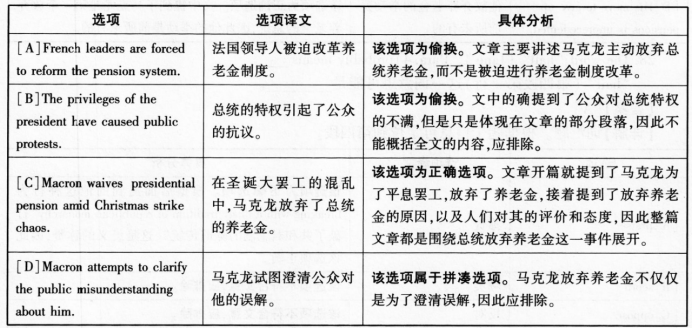
What is the main idea of the passage?
参考答案
C
答案解析
What is the main idea of the passage
这篇文章的主旨是什么?
主旨题。需要综合考虑全文。
参考译文
(26)法国交通部门的罢工给圣诞节旅客造成了混乱,为了平息民众对政客特权的愤怒。法国
总统埃马纽埃尔·马克龙将放弃自己丰厚的总统养老金。
铁路罢工持续到第三周,旅行者争相回家过节,这个周末刚满42岁的马克龙做出了一个标志性的举动,(27)成为50多年来第一个放弃养老金的总统。每个月超过6 000欧元的养老金,这是所有的法国领导人不论年龄和贫富,离职后都能得到的福利。马克龙办公室补充说,他不会在法国法院任职。法国的前总统都是法院终身成员,每月领取13 500欧元的津贴。
亲商界的马克龙意识到,针对其养老金改革计划的罢工越来越多地集中在他个人身上.街头示威活动中出现了将他描绘成国王的漫画和横幅。就像今年早些时候,反政府抗议者抱怨马卡龙在避暑胜地建了一个游泳池,以及昂贵的爱丽舍宫地毯和陶器,养老金抗议活动的横幅嘲笑他和其他前总统的奢侈生活方式和卸任后的豪华住处。
(28)《巴黎人报》对马克龙放弃总统养老金的决定表示欢迎,称其打破了共和君主制的陈旧传统。
尽管有罢工,政府坚称将推进法国养老金制度的统一。他们认为,随着人口老龄化.废除针对从铁路和能源工人到律师和巴黎歌剧院员工等各行各业人员的42项特殊制度,对保持该制度在财政上可行至关重要。
随着罢工将持续到新年,养老金僵局已成为马克龙的个人问题,他曾承诺要实现自战后以来法国社会模式和福利体系的最大“转变”。(29)马克龙政治身份的本质正面临危险。他一直表示,他宁愿在不受欢迎的情况下对法国模式进行结构性改革,也不愿在街头抗议面前退缩。改革的失败将削弱马克龙约25%的坚定支持基础。这些支持基础对2022年的连任竞选是至关重要的。
法国各地的旅客纷纷在火车取消和道路拥挤的情况中开始了圣诞旅行。法国国营铁路公司警告称,在圣诞期间,交通将“严重中断”。尽管一些工会呼吁在节日期间暂停罢工,铁路工人团体仍继续罢工。抗议活动也影响到了企业,尤其是零售业。行业协会报告称,与去年相比,营业额下降了30%至60%。Ifop的民调显示,51%的法国人支持或理解罢工,百分比略低于前一周。
马克龙敦促罢工者在圣诞节期间放松放松,说他们应该拥抱“责任精神”。在访问科特迪瓦时,他说:“罢工行动是正当的,受宪法保护,但我认为,在一个国家的生活中,出于对家庭和家庭生活的尊重,休战是好的。”
这篇文章的主旨是什么?
主旨题。需要综合考虑全文。
参考译文
(26)法国交通部门的罢工给圣诞节旅客造成了混乱,为了平息民众对政客特权的愤怒。法国
总统埃马纽埃尔·马克龙将放弃自己丰厚的总统养老金。
铁路罢工持续到第三周,旅行者争相回家过节,这个周末刚满42岁的马克龙做出了一个标志性的举动,(27)成为50多年来第一个放弃养老金的总统。每个月超过6 000欧元的养老金,这是所有的法国领导人不论年龄和贫富,离职后都能得到的福利。马克龙办公室补充说,他不会在法国法院任职。法国的前总统都是法院终身成员,每月领取13 500欧元的津贴。
亲商界的马克龙意识到,针对其养老金改革计划的罢工越来越多地集中在他个人身上.街头示威活动中出现了将他描绘成国王的漫画和横幅。就像今年早些时候,反政府抗议者抱怨马卡龙在避暑胜地建了一个游泳池,以及昂贵的爱丽舍宫地毯和陶器,养老金抗议活动的横幅嘲笑他和其他前总统的奢侈生活方式和卸任后的豪华住处。
(28)《巴黎人报》对马克龙放弃总统养老金的决定表示欢迎,称其打破了共和君主制的陈旧传统。
尽管有罢工,政府坚称将推进法国养老金制度的统一。他们认为,随着人口老龄化.废除针对从铁路和能源工人到律师和巴黎歌剧院员工等各行各业人员的42项特殊制度,对保持该制度在财政上可行至关重要。
随着罢工将持续到新年,养老金僵局已成为马克龙的个人问题,他曾承诺要实现自战后以来法国社会模式和福利体系的最大“转变”。(29)马克龙政治身份的本质正面临危险。他一直表示,他宁愿在不受欢迎的情况下对法国模式进行结构性改革,也不愿在街头抗议面前退缩。改革的失败将削弱马克龙约25%的坚定支持基础。这些支持基础对2022年的连任竞选是至关重要的。
法国各地的旅客纷纷在火车取消和道路拥挤的情况中开始了圣诞旅行。法国国营铁路公司警告称,在圣诞期间,交通将“严重中断”。尽管一些工会呼吁在节日期间暂停罢工,铁路工人团体仍继续罢工。抗议活动也影响到了企业,尤其是零售业。行业协会报告称,与去年相比,营业额下降了30%至60%。Ifop的民调显示,51%的法国人支持或理解罢工,百分比略低于前一周。
马克龙敦促罢工者在圣诞节期间放松放松,说他们应该拥抱“责任精神”。在访问科特迪瓦时,他说:“罢工行动是正当的,受宪法保护,但我认为,在一个国家的生活中,出于对家庭和家庭生活的尊重,休战是好的。”
你可能感兴趣的试题
A.God is sacred and inviolable.
B.God is mysterious and merciful.
C.God makes the world unpredictable.
D.God makes the world penetrable.
A.strongly opposes Einstein's view of the world
B.has made mistakes in his scientific research
C.never admits his mistakes in the research
D.goes out of his way in scientific research
A.control
B.exploit
C.improvise
D.withstand