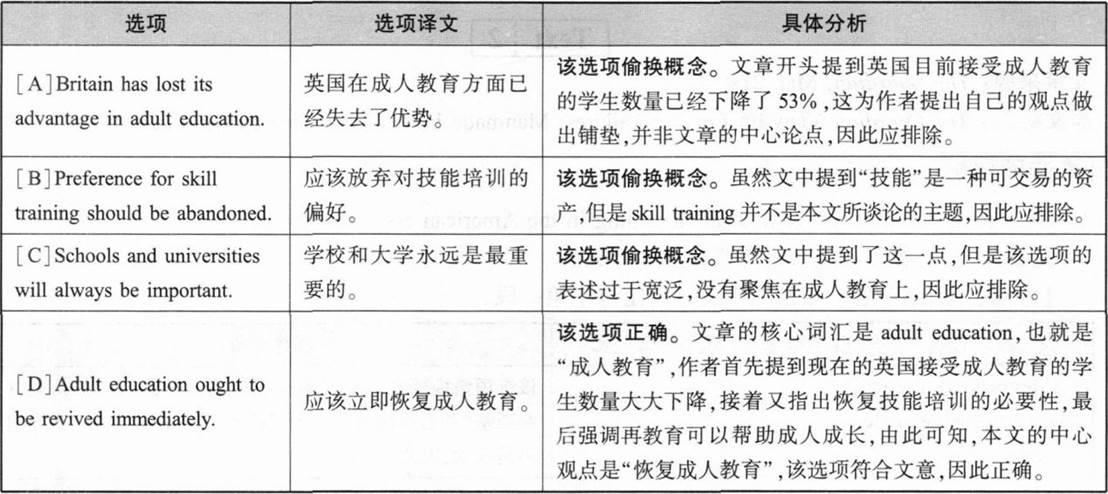
What's the central idea of this passage?
参考答案
D
答案解析
What's the central idea of this passage?
这篇文章的中心思想是什么?
主旨题。该题为主旨题,需要综合全文内容进行判断。
【翻译】
(21)英国失去了一些重要的东西:2009年至2017年期间,接受高等教育的非全日制学生数量下降了53%。这个曾经盛行大学、课程和夜校文化的国家,如今其继续学习的成年人数量远低于包括德国在内的其他国家。在社会经济水平最低的群体中,49%的人毕业后没有接受过任何培训。政府每年在19岁以后教育上投入的金额达200亿英镑,其中93%被投在那些已经拥有3级以上资格证书的人身上。
这一下降发生在紧缩政策之前,尽管紧缩政策使情况变得更糟。本月早些时候,成人教育百年委员会发布了一份新报告,其中一位撰稿人描述了新工党执政期间所发生的翻天覆地的变化。从19世纪开始,围绕工人学院、工人教育协会和大学形成了一个完整的体系。到21世纪初,(22)这类机构的内在价值以及它们所代表的无数机遇在很大程度上被抛弃,取而代之的是一种更有助益的观点,即“技能”是一种可交易的资产。
这并不是说,在讨论应该教什么和如何教的时候,劳动力市场不是一个关键的参考因素。未能对技能熟练的劳动力进行投资,是长期战略思维严重不足的表现——现代保守党似乎放弃了长期战略思维.转而盲目而危险地信奉自由放任经济。(23)预计在未来10年内,多达90%的工作岗位将实现自动化,而企业将因疫情而遭受重创。鉴于此,英国工业联合会全力支持其所谓的“全国技能再培训计划”。
但是,为青少年和寻求再培训的成年人提供职业培训的新资源并不是唯一的问题。在该委员会的报告发布时.为政府提供继续教育建议的经济学家兼无党派人士艾莉森·沃尔夫回忆起自己年轻时翻阅“一本厚厚的夜校书籍”的往事。报告恰当地强调了气候危机是必须加深人们对周围世界了解的原因之一;因为我们需要适应生活方式,而且我们必须为我们的想象力和好奇心找到新的出路。在英国,大约有900万成年人的计算能力和读写能力较差,这是对人才的浪费。(24)在罗奇代尔等城镇,投资于社区主导的成人学习已经为城镇的卫生和治安节省了更多资金。
在苏格兰和威尔士,已经引进了由政府资助的专项基金来提高成人技能。北部保守党议员以及像Onward智库这样的团体应该团结起来——后者对英国支离破碎的“社会结构”感到担忧。部长们计划花费15亿英镑来升级大学。所有成年人都有权享受一次新的学习机会。但已完成的计划应该走得更远,比如让议会参与进来,以及偿还从联合学习基金中拿走的现金。学校和大学永远是重要的。(25)现在政治家和民间团体应该更多地关注许多其他配置问题,从而帮助人们(尤其是那些需要第二次教育机会的人)快速成长。
这篇文章的中心思想是什么?
主旨题。该题为主旨题,需要综合全文内容进行判断。
【翻译】
(21)英国失去了一些重要的东西:2009年至2017年期间,接受高等教育的非全日制学生数量下降了53%。这个曾经盛行大学、课程和夜校文化的国家,如今其继续学习的成年人数量远低于包括德国在内的其他国家。在社会经济水平最低的群体中,49%的人毕业后没有接受过任何培训。政府每年在19岁以后教育上投入的金额达200亿英镑,其中93%被投在那些已经拥有3级以上资格证书的人身上。
这一下降发生在紧缩政策之前,尽管紧缩政策使情况变得更糟。本月早些时候,成人教育百年委员会发布了一份新报告,其中一位撰稿人描述了新工党执政期间所发生的翻天覆地的变化。从19世纪开始,围绕工人学院、工人教育协会和大学形成了一个完整的体系。到21世纪初,(22)这类机构的内在价值以及它们所代表的无数机遇在很大程度上被抛弃,取而代之的是一种更有助益的观点,即“技能”是一种可交易的资产。
这并不是说,在讨论应该教什么和如何教的时候,劳动力市场不是一个关键的参考因素。未能对技能熟练的劳动力进行投资,是长期战略思维严重不足的表现——现代保守党似乎放弃了长期战略思维.转而盲目而危险地信奉自由放任经济。(23)预计在未来10年内,多达90%的工作岗位将实现自动化,而企业将因疫情而遭受重创。鉴于此,英国工业联合会全力支持其所谓的“全国技能再培训计划”。
但是,为青少年和寻求再培训的成年人提供职业培训的新资源并不是唯一的问题。在该委员会的报告发布时.为政府提供继续教育建议的经济学家兼无党派人士艾莉森·沃尔夫回忆起自己年轻时翻阅“一本厚厚的夜校书籍”的往事。报告恰当地强调了气候危机是必须加深人们对周围世界了解的原因之一;因为我们需要适应生活方式,而且我们必须为我们的想象力和好奇心找到新的出路。在英国,大约有900万成年人的计算能力和读写能力较差,这是对人才的浪费。(24)在罗奇代尔等城镇,投资于社区主导的成人学习已经为城镇的卫生和治安节省了更多资金。
在苏格兰和威尔士,已经引进了由政府资助的专项基金来提高成人技能。北部保守党议员以及像Onward智库这样的团体应该团结起来——后者对英国支离破碎的“社会结构”感到担忧。部长们计划花费15亿英镑来升级大学。所有成年人都有权享受一次新的学习机会。但已完成的计划应该走得更远,比如让议会参与进来,以及偿还从联合学习基金中拿走的现金。学校和大学永远是重要的。(25)现在政治家和民间团体应该更多地关注许多其他配置问题,从而帮助人们(尤其是那些需要第二次教育机会的人)快速成长。
你可能感兴趣的试题
A.Institutional investors have taken control of the universe.
A.Institutional investors have taken control of the universe.
B.Stockholders are more mindful of their sales pitch than ever.
B.Stockholders are more mindful of their sales pitch than ever.
C.Securities investment is under the control of algorithms.
C.Securities investment is under the control of algorithms.
D.Massive criticism has impeded the development of robots.
D.Massive criticism has impeded the development of robots.
A.BlackRock did not become the biggest asset manager of the world until last year.
B.Artificial intelligence makes the distinction between humans and computers vague.
C.The approach of computers running investment portfolios is a worldwide success.
D.The big three now manages a tenth of the world's quoted securities respectively.
A.It cannot generate investment to create enough jobs or essential innovation.
B.The state would remain the driving force behind technological revolutions.
C.Passive investing would cause and exacerbate workers' sense of insecurity.
D.Big companies would have to pay out high dividends to keep the company running.