单选题
题号 #6335797

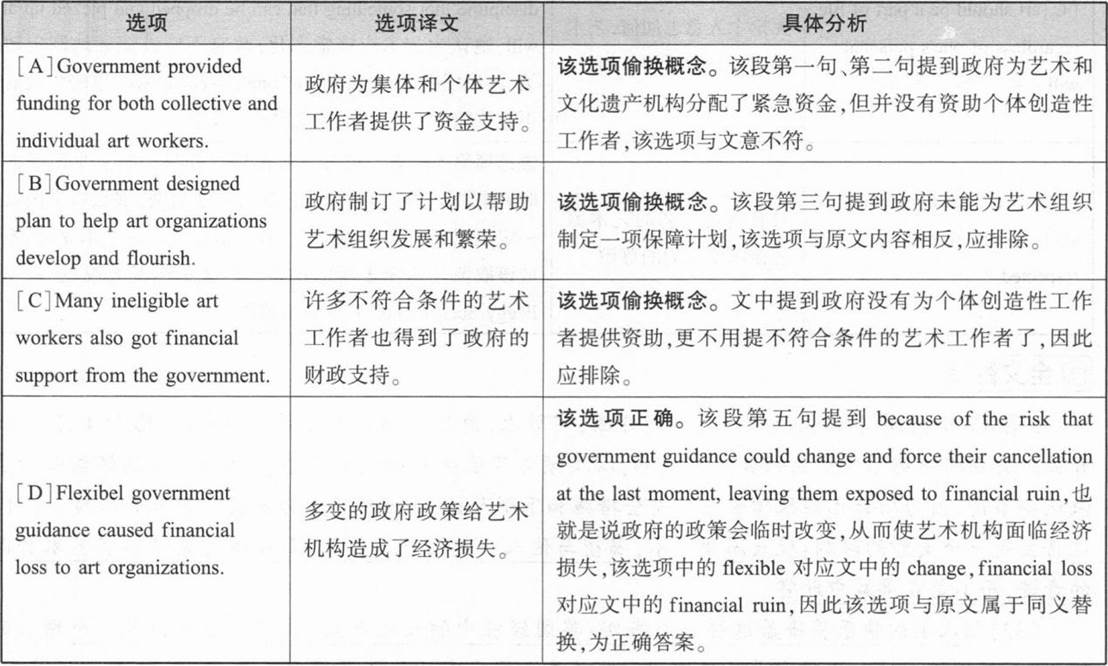
According to Paragraph 3, which of the following statements is true?

进入在线模考

参考答案

D

答案解析

According to Paragraph 3,which of the following statements is true?
  根据第三段,下列哪项陈述是正确的?
细节题。根据题干提示可定位于第三段。
你可能感兴趣的试题

A.joyous
B.disastrous
C.fortunate
D.relieved
A.we can judge a society by its respect accorded to its artists
B.art industries contribute more to the UK economy than to other sectors
C.art should be a part of life regardless of one's personal will
D.artists with miraculous skills should be highly respected
3 根据以下材料,回答题
Goliath beats David isn't half as good a story, but it is the usual way of the world.So last week'snews that Amazon has fended off an attempt by workers to form its first ever US trade union isunsurprising, if sad.What intrigues is the volume and variety of support that the struggle won across theUS and the world, from faith leaders to the NFL players association to Republican ever-hopefuls such asMarco Rubio.In that intensity of interest lies the real surprise: the change in popular politics towardsboth big business and workers.
As battles go, it was always ridiculously lopsided.In one comer you had the world's richest man sittingatop corporate America's second-largest employer, in perhaps the most anti-union country in the rich world.Opposing him were workers and activists in Alabama, one of the most conservative of all US states, tryingsomething never attempted before in the land of the flee: to unionise an entire Amazon warehouse, thosehangars full of consumer goods and crushing conditions for workers that together define our way of life.Nowonder Jeff Bezos won last week, with workers at the Bessemer warehouse voting more than two to oneagainst forming a union.That result allows Amazon to continue hiring and firing at will.It also brings to ahalt perhaps the most watched union drive in the US in years.The future of industrial relations inside a giantwarehouse in the Deep South became a subject of debate across Europe, so vast is Amazon's empire.
Just why the defeat was so large is a question that has prompted much soul-searching among Americanprogressives, with some blaming poor strategic choices by the activists and the Retail, Wholesale andDepartment Store Union claiming Amazon pursued "egregious and illegal" anti-union tactics, allegations thatthe company denies.But perhaps the fairest assessment is that from the longstanding labour writer and activistJane McAlevey: "If the rules for unionization in the US came close to being fair, they E pro-union workers 1would have won.But the rules aren't fair.Quite the opposite: they are outrageously unfair."
But there are two hopeful lessons that America and the rest of the world can take from this story ofdisappointment.First, it is now convention to argue that societies need strong unions.Last month, Joe Bidengave that message in a video address.Researchers at the International Monetary Fund have long pointed outthe links between inequality and financial crises, and argued that "restoration of the lower income group'sbargaining power is more effective" than a crash in righting a giant wealth gap.In that battle between thebillionaire Mr Bezos and the Alabama workers, it's clear who those IMF researchers would have rooted for.
Second, the excitement around that Alabama ballot shows how far sentiment in the capitalist heartland ismoving against big business and towards labour.Opinion polls suggest American public approval for tradeunions is the highest it has been in almost 20 years, at 65%.This is not a shift in mood that has been led byMr Biden; rather, the president is being compelled to channel it, often under the tutelage of politicians andadvisers further to the left.This is a very different kind of politics than seen in the era of Barack Obama.Where it goes next will be worth watching.
According to Paragraph 1, what is the real surprise?
A.Amazon destroyed workers' attempt to form their trade union.
B.The struggle between Amazon and workers won worldwide support.
C.Big business and workers began to participate in popular politics.
D.Big business and workers took intensive interest in popular politics.
找试题 · 找答案 · 找资料 在线模考