Directions:
Write an essay based on the chart below.In your essay, you should
1 ) describe and interpret the chart, and
2) give your comments.
Write your answer in about 150 words on the ANSWER SHEET.( 15 points)
参考答案
暂无
答案解析
参考范文:
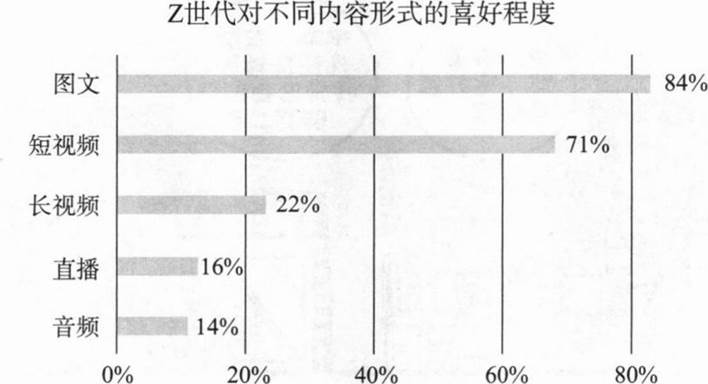
The chart illustrates different types of content favored by Generation Z. Over 80% of the respondentsshow a preference for infographics, while about 70% have an appetite for short-form videos. Bycomparison, only a small percentage of the interviewed love long-form videos (22%), live streaming( 16% ) or audio files ( 14% ).
Young people prefer visual content primarily because we are visual creatures by nature. In other words,our brains are wired to digest and retain content with images more easily than verbal or textual informationalone. This is exactly what scientists call the Picture Superiority Effect. Furthermore, with the increased useof smartphones, the young generation's attention span is getting shorter on average. Consequently, we aremore likely to skim bite-sized content so as to seek instant gratitication. That explains why short-formvideos enjoy wide popularity.
To cater to users' tastes, content marketers could try to make full use of creative visuals. In addition,they should practice the "less is more" approach by producing videos that get to the point quicker.
参考译文:
该图展示了Z世代对不同内容形式的喜好。超过80%的受访者偏好图文,大约70%的受访者喜爱短视频。相比之下,只有一小部分受访者喜欢长视频(22%)、直播(16%)或者音频(14%)。
年轻人更喜欢视觉化的信息,主要原因在于我们天生就是视觉动物。换言之,相比纯音频或纯文字的信息,我们的大脑天生更容易理解并记住图像内容。这正是科学家们所说的图优效应。此外,随着智能手机使用时长的增加,年轻一代的平均注意力持续时间越来越短。因此,我们更可能去浏览碎片化的内容以获得即时满足。这也就解释了为什么短视频广受欢迎。
为了迎合用户的喜好,内容营销人员可以尝试充分利用富有创意的视觉材料。同时,还应践行“少即是多”的理念,使制作的视频内容更快速地直击要点。
你可能感兴趣的试题

A.defects
B.advantages
C.definitions
D.causes