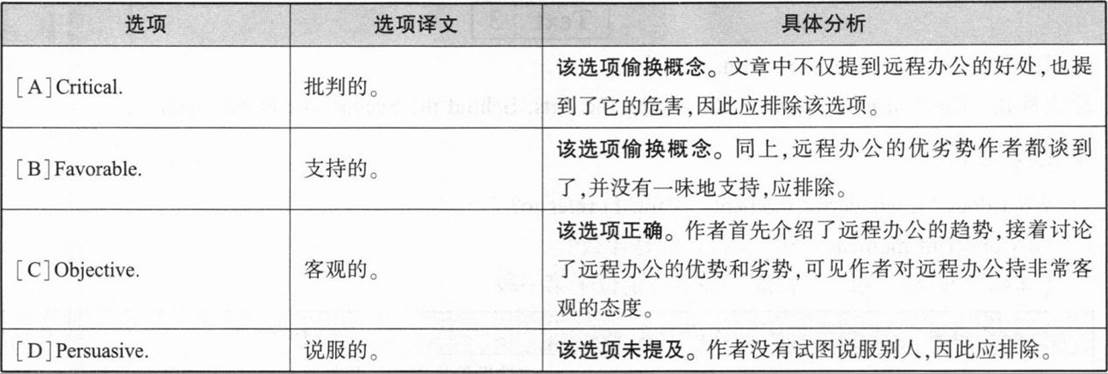
What is the author's attitude towards remote working?
参考答案
C
答案解析
What is the author's attitude towards remote working?
作者对远程办公持什么态度?
推理题。该题需要综合全文内容进行判断。
【全文翻译】
随着英国谨慎地解除封锁,其在疫情后面临的挑战日益凸显。周二,决议基金会智库在一项研究报告中简明扼要地指出其中的一些挑战.包括到2050年实现净零碳排放,以及在部分经济领域实现自动化转型。(26)该报告还强调了在新冠肺炎疫情背景下产生的一种新的社会分化。当疫情结束后,这种分化很可能会以某种形式继续存在。2019年,只有5%的员工主要在家办公,但在第一次和第三次封锁期间,这一数字几乎增长到50%。随着相当大的一部分知识经济成功地迁移到伦敦和其他地方的富裕郊区,远程办公在收入较高和受教育程度较高的人群中尤为普遍。英国国家统计局本周公布的数据显示,在泰晤士河沿岸的里士满市,70%的员工在疫情期间曾在家办公,而在伯恩利市曾在家办公的人数不到14%。
这种转变的影响及其社会构成值得我们深思。对于数百万能够在家办公的富裕市民来说,在未来很可能会出现一种“居家办公”和“单位办公”相结合的工作模式。这将对该国的经济地理产生相当大的影响。例如,全英房屋抵押贷款协会和桑坦德银行英国分行已经宣布关闭大量城市写字楼。全英房屋抵押贷款协会已经通知13 000名员工,他们可以在国内任何地方自由工作。汇丰银行打算减少办公空间,但要求员工在一周的部分时间来公司上班。随着其他企业纷纷效仿,以及越来越多的人在网上购物。商业街和城市中心的衰落可能会加速。当地商品和服务的供应商在实体经济中陷入困境,可能会继续挣扎,也可能被迫搬迁。(27)政府必须适当支持在这一进程中可能受害的地方和个人,并向他们提供有意义的选择方案和援助。
(28)对于企业来说,完全或部分使用zoom远程办公的主要优势是显而易见的:在最近的一项调查中,88%的企业表示在2020年他们通过远程办公在不动产方面节省了成本;92%的企业预计未来两到三年内成本将进一步降低。对于员工来说,情况就复杂多了。他们肯定不会因为没有了紧张的日常通勤而感到难过。但有证据表明,随着短期的新鲜感变成了一种新常态,他们会有社会脱节感、倦怠感和士气低落感。
(29)2017年政府工作评估报告的作者马修·泰勒本月警告称,大规模的在家办公可能会造成“高度分散的劳动力”。他们会缺乏团结和互帮互助的精神,而这本该是良好工作体验的一部分。即将离任的英国央行首席经济学家安迪·霍尔丹提出,在线办公可能会长期消耗创造力和协作能力。对于刚开始职业生涯的年轻人来说.有形的工作场所为他们提供了与同事建立关系、感受组织氛围的重要机会。
在某种程度上,在家工作将成为数百万人生活的一部分。但对于那些在虚拟世界工作的人和那些试图在虚拟世界外谋生的人来说,必须仔细考虑如何减轻它的负面影响。
作者对远程办公持什么态度?
推理题。该题需要综合全文内容进行判断。
【全文翻译】
随着英国谨慎地解除封锁,其在疫情后面临的挑战日益凸显。周二,决议基金会智库在一项研究报告中简明扼要地指出其中的一些挑战.包括到2050年实现净零碳排放,以及在部分经济领域实现自动化转型。(26)该报告还强调了在新冠肺炎疫情背景下产生的一种新的社会分化。当疫情结束后,这种分化很可能会以某种形式继续存在。2019年,只有5%的员工主要在家办公,但在第一次和第三次封锁期间,这一数字几乎增长到50%。随着相当大的一部分知识经济成功地迁移到伦敦和其他地方的富裕郊区,远程办公在收入较高和受教育程度较高的人群中尤为普遍。英国国家统计局本周公布的数据显示,在泰晤士河沿岸的里士满市,70%的员工在疫情期间曾在家办公,而在伯恩利市曾在家办公的人数不到14%。
这种转变的影响及其社会构成值得我们深思。对于数百万能够在家办公的富裕市民来说,在未来很可能会出现一种“居家办公”和“单位办公”相结合的工作模式。这将对该国的经济地理产生相当大的影响。例如,全英房屋抵押贷款协会和桑坦德银行英国分行已经宣布关闭大量城市写字楼。全英房屋抵押贷款协会已经通知13 000名员工,他们可以在国内任何地方自由工作。汇丰银行打算减少办公空间,但要求员工在一周的部分时间来公司上班。随着其他企业纷纷效仿,以及越来越多的人在网上购物。商业街和城市中心的衰落可能会加速。当地商品和服务的供应商在实体经济中陷入困境,可能会继续挣扎,也可能被迫搬迁。(27)政府必须适当支持在这一进程中可能受害的地方和个人,并向他们提供有意义的选择方案和援助。
(28)对于企业来说,完全或部分使用zoom远程办公的主要优势是显而易见的:在最近的一项调查中,88%的企业表示在2020年他们通过远程办公在不动产方面节省了成本;92%的企业预计未来两到三年内成本将进一步降低。对于员工来说,情况就复杂多了。他们肯定不会因为没有了紧张的日常通勤而感到难过。但有证据表明,随着短期的新鲜感变成了一种新常态,他们会有社会脱节感、倦怠感和士气低落感。
(29)2017年政府工作评估报告的作者马修·泰勒本月警告称,大规模的在家办公可能会造成“高度分散的劳动力”。他们会缺乏团结和互帮互助的精神,而这本该是良好工作体验的一部分。即将离任的英国央行首席经济学家安迪·霍尔丹提出,在线办公可能会长期消耗创造力和协作能力。对于刚开始职业生涯的年轻人来说.有形的工作场所为他们提供了与同事建立关系、感受组织氛围的重要机会。
在某种程度上,在家工作将成为数百万人生活的一部分。但对于那些在虚拟世界工作的人和那些试图在虚拟世界外谋生的人来说,必须仔细考虑如何减轻它的负面影响。
你可能感兴趣的试题
A.Reopening the arts and cultural venues.
B.Appreciating real works of art in person.
C.Satisfying people's hunger for art on a screen.
D.Going to the gallery with family and fi'iends.
A.people enjoyed great pleasure from visiting the art venues
B.the British cultural economy ran into difficulties during the pandemic
C.the British economy has been hit hard by the pandemic
D.all industries have been affected by the outbreak of Covid-19
A.Government provided funding for both collective and individual art workers.
B.Government designed plan to help art organizations develop and flourish.
C.Many ineligible art workers also got financial support from the government.
D.Flexibel government guidance caused financial loss to art organizations.